Probability and football. Published in 2026.
Decision safety in football passing
A reproducible metric from probabilistic option sets
Lucas Carrasquilla, José Alejandro Guerrero-Vargas and Pedro Wightman
International Journal of Sports Science & Coaching, 2026
The question
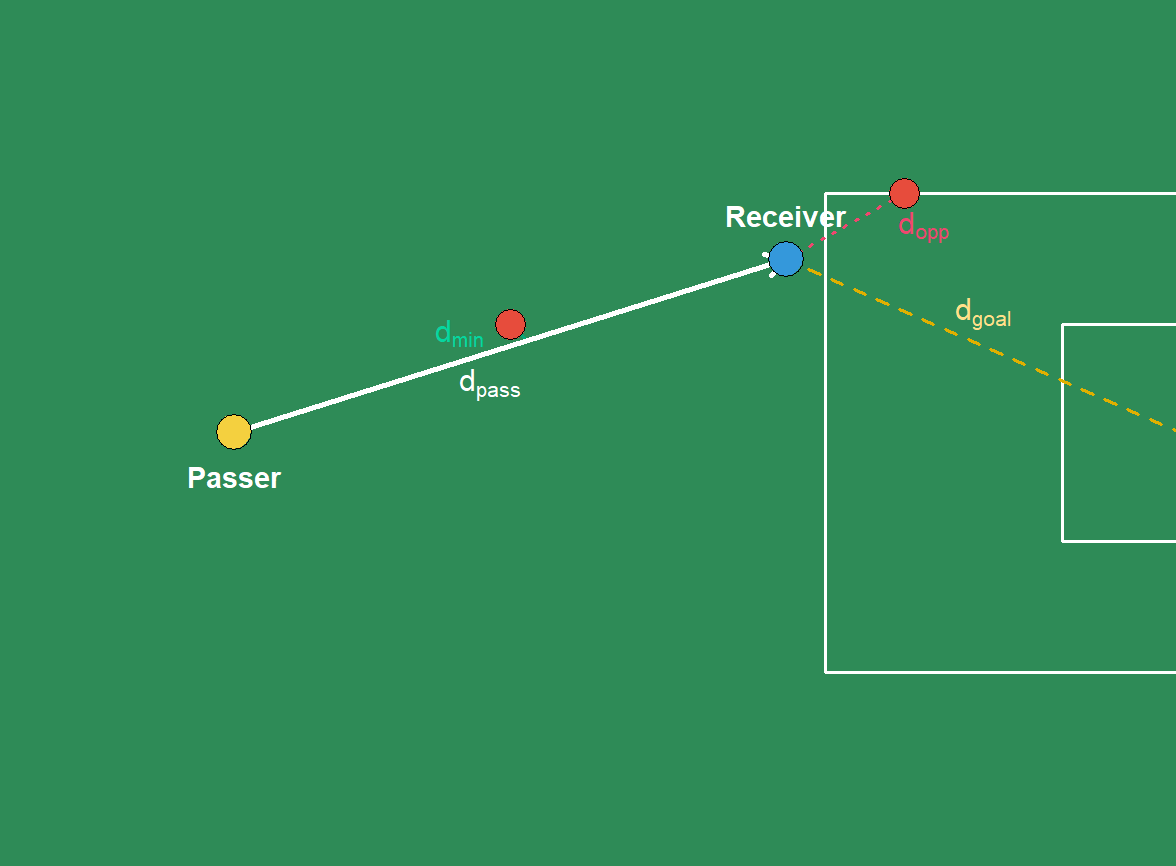
A completed pass records what happened. Assessing the choice also requires the alternatives. StatsBomb 360 freeze frames make it possible to reconstruct the passing options visible at the moment of release.
What the analysis finds
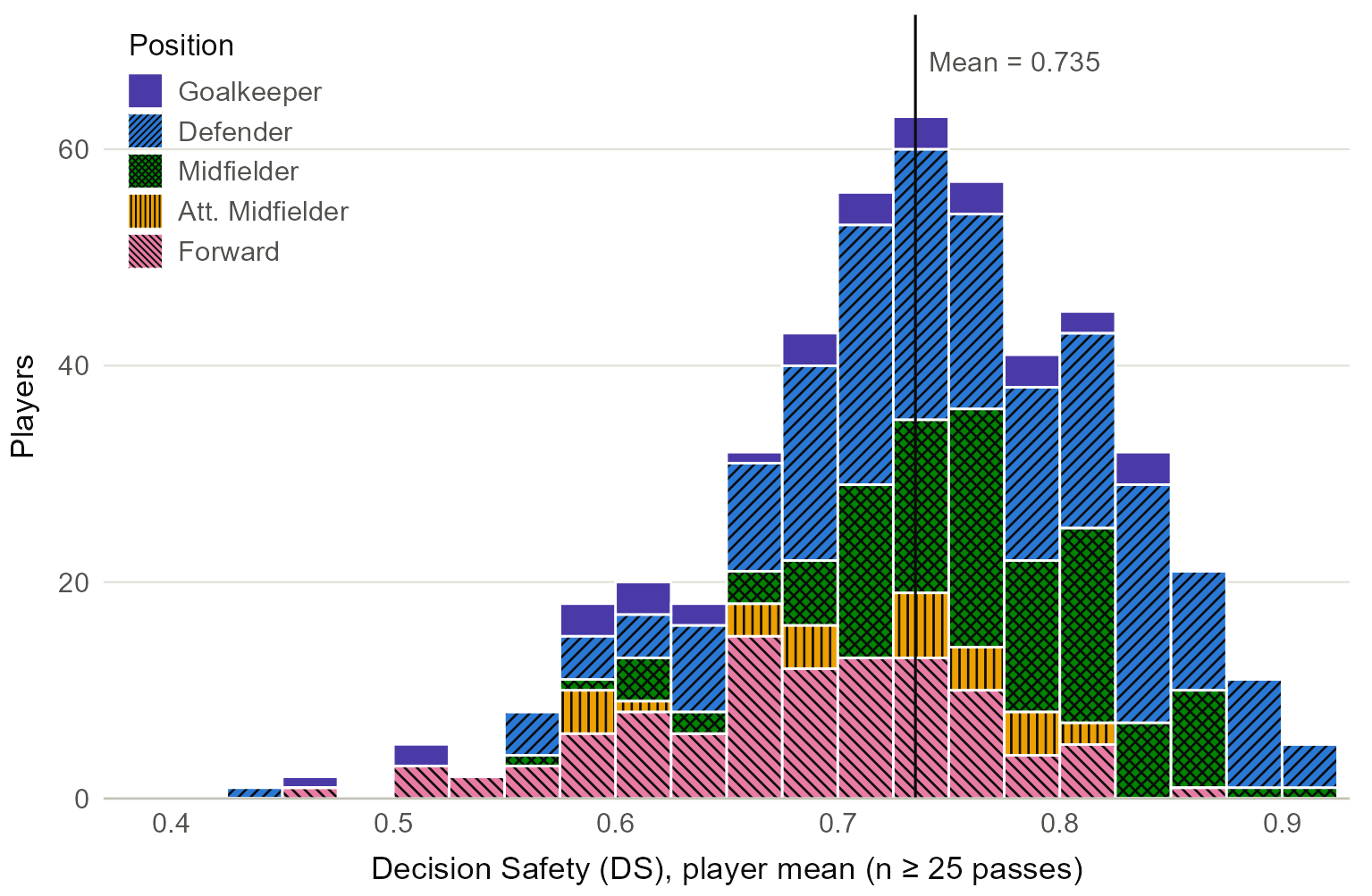
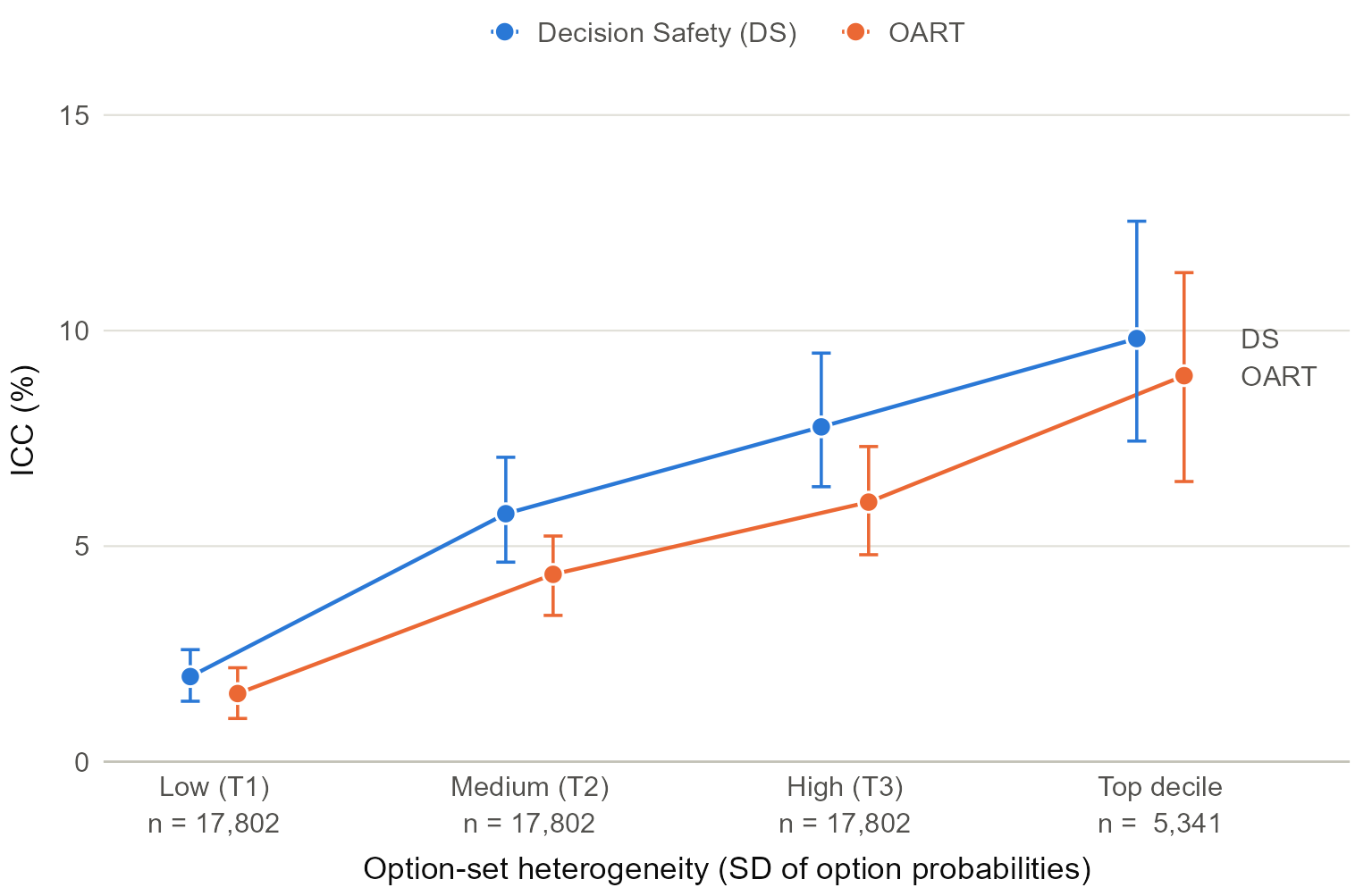
Decision safety and opportunity-adjusted risk-taking locate the chosen pass within its option set, using two normalisations of the same quantity. Most of the variation is situational: differences between players account for 4.4% of the variance in decision safety, rising to 9.8% where the option set is most heterogeneous.
What the result means
These measures describe safety, not overall decision quality. Safer passers create fewer chances, r = -0.34 against expected assists per pass, and the apparent link between attacking-third risk and possession expected goals is accounted for by the shot-assist pass itself.
Data and method
An XGBoost model estimates completion probability from situational features, without player identity. It is evaluated with match-grouped cross-validation and applied to every visible alternative. The analysis covers passes with a usable freeze frame and a recorded recipient.
From the paper